ICT Overview
All ICT articles.
NON-FUNCTIONAL, OPERATIONAL, PRODUCT & SERVICE REQUIREMENTS CATALOGUE
Now available on Apple Books and Amazon Generic ICT Requirements Catalogue: A Comprehensive Reference for Digital Services and Systems
Read more
Bimodal IT only helps mediocre organisations
Bimodal IT is a delivery model, heavily hyped by Gartner, that defines two modes of operation: - Mode 1: Delivering and evolving stable, secure, business-critical systems of record in a controlled, highly integrated environment
Read more
Content & Deployment Architecture
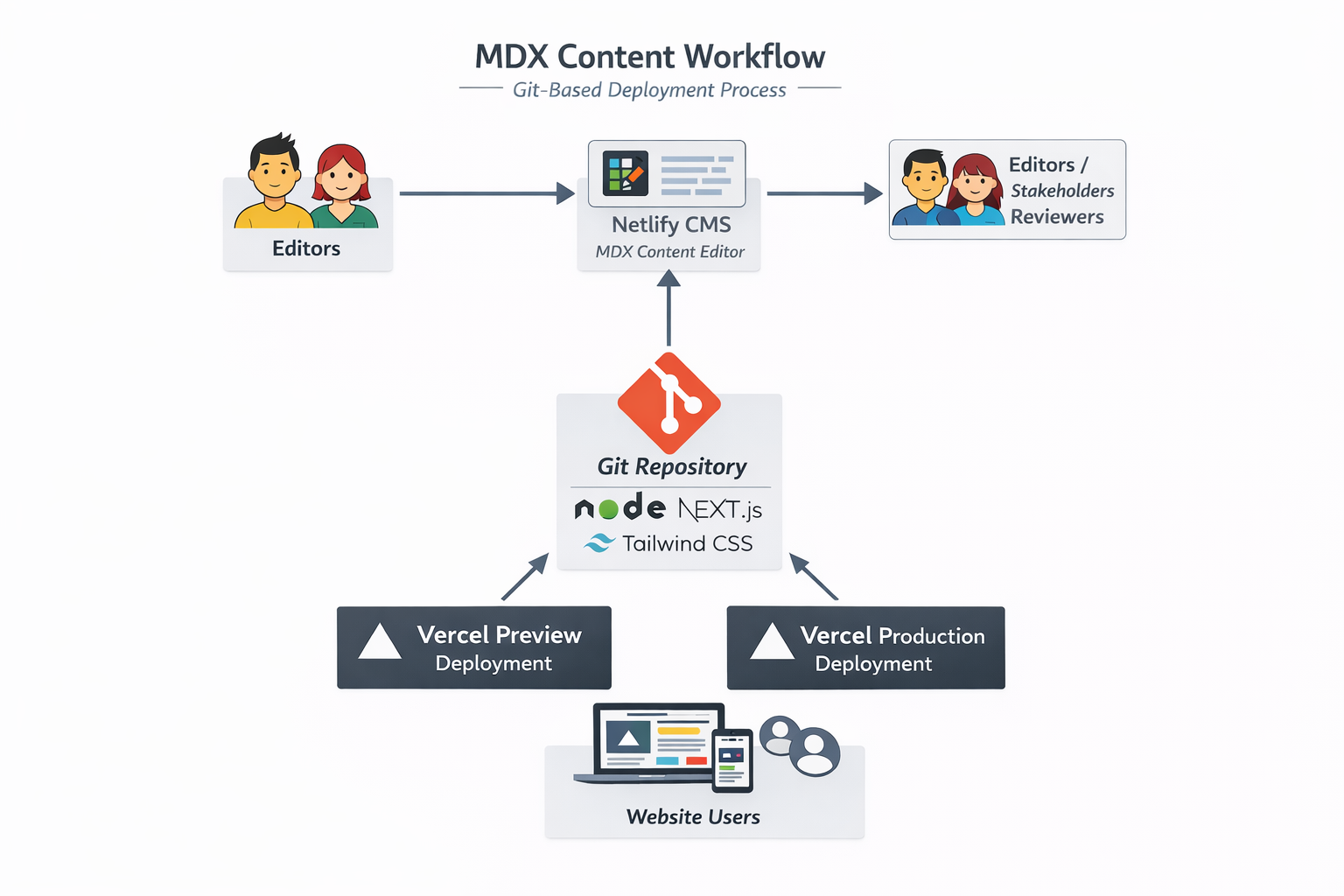
This website uses a Git-based content workflow for managing MDX files, enabling editors to create and maintain content efficiently, with automated preview and production deployments through Vercel. Content creators or editors use Netlify CMS, an editor interface that allows them to edit MDX content without touching the code directly. This simplifies content management for non-technical users.
Read more
DevOps alleen geschikt voor speelgoedapplicaties
De term DevOps wordt tegenwoordig te pas en te onpas gebruikt en lijkt te staan voor agile softwareontwikkeling waarbij developers in een hippe werkomgeving plezier mogen maken met het vrijblijvend bouwen en live brengen van leuke nieuwe autonome state-of-the-art apps. ---
Read more
ICT Infrastructure and Application Portfolio
ICT Services are built on the ICT Infrastructure and Application Portfolio. The ICT Infrastructure Portfolio should serve as a solid foundation, enabling new applications to be rolled out quickly. Agile Portfolio & Release Management practices mainly apply to the functional layers of ICT. The infrastructure portfolio can be managed in a more traditional way over longer horizons, but it must also be prepared to provide flexibility to meet the short-term needs of the Application Portfolio.
Read more
ICT Service Portfolio
De businessprocessen die de Product & Service output van de organisatie leveren, worden ondersteund door ICT middels het ICT Service Portfolio. Het Service Portfolio beschrijft de services die een ICT-leverancier (intern of extern) levert in termen van waarde voor de Business. Dit maakt het mogelijk om met bestaande bedrijfskundige technieken zoals financieel-, marketing- en risicomanagement ICT te besturen en zo de besluitvormingsprocessen concreet in te richten.
Read more
MDX website tutorial
micro Service Development Life Cycle (mSDLC)
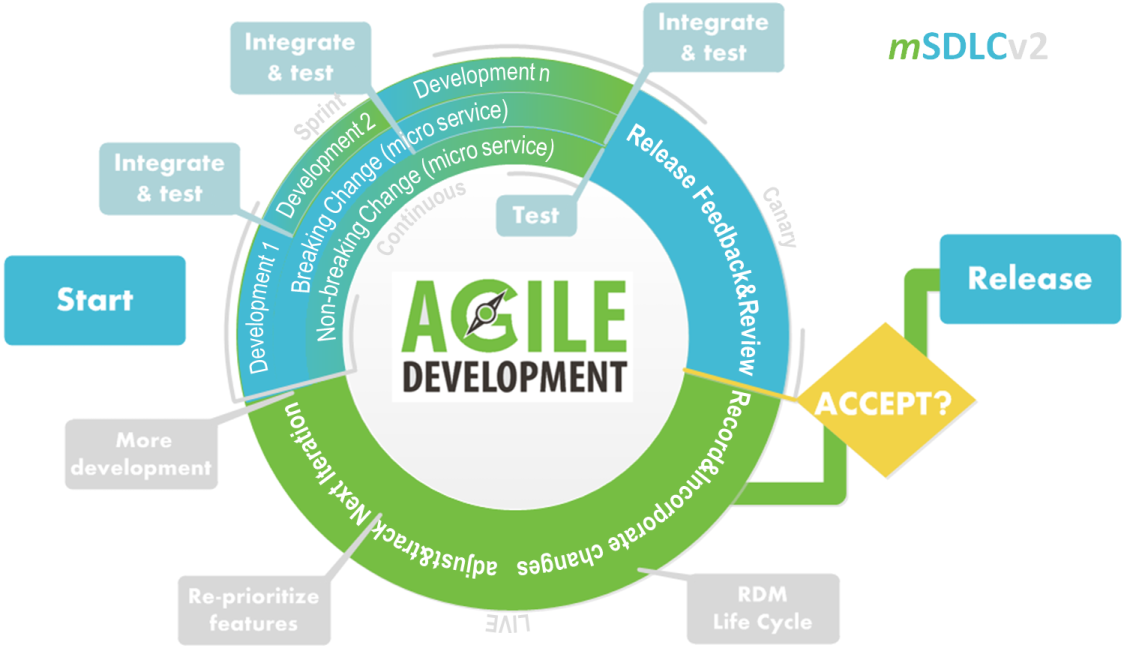
Although SDLCs date back to the Waterfall era of IT, the model is still widely used and has been translated into the Agile Software Development language. Traditionally, the full multiple-year lifespan of software was covered by one cycle of the SDLC. In the Agile SDLC model, each sprint of several weeks is represented by a cycle. - SDLC Waterfall
Read more
Patch management
Patch management is the area of COTS systems management for identifying, acquiring, testing, installing and verifying patches for software and firmware used by infrastructure (both systems and services layers), virtual server environments, OSs, middleware, applications and both infrastructure and end user devices. Patches are applied for corrective and adaptive maintenance actions to resolve technical, security and functionality problems. Custom developed systems are managed via ALM. From a security perspective, patching is required to mitigate software vulnerabilities.
Read more
Software development methodologies evolution
From Waterfall down the Punch Card to DevOps in the Cloud In the late 1950s, second-generation computers, transistor-based and replacing the enormous punch-card-fed vacuum-tube machines, started the commercial usage of computers. These mainframes had to be fed with punch cards that took days or weeks to “program” and which had to be entered into the computer in a small available timeslot. CPU usage was extremely expensive, hence off-line programming and extensive preparation of the program via the Waterfall method. The only available bullet had to be on target.
Read more
True Agility - Many organisations not as agile as they think
Many organisations believe they work agile because their software development teams use Scrum or their project managers have received a SAFe® certificate. In reality, they still play according to the rules of Waterfall, using traditional demand management practices with yearly workplans. <iframe
Read more