Why do people feel the urge to become a manager?
What drives managers?
With the exception of the public sector, most organisations contain many people who desperately want to become a manager. What drives this urge, especially considering that the majority lack what it takes to actually manage?
➡️ 20 Signs That Your Boss May Be a Psychopath
Status symbol
One important reason people want to become managers is the status symbol associated with the role. Managers are perceived as higher and more important in the organisational hierarchy — and that is exactly how they want to be seen.
For this group, becoming a manager is the goal in itself, not a means to achieve larger objectives such as improving organisational performance or realising a shared vision.
These managers often make their way to the top not through competence or integrity, but by managing upwards and treating those below them poorly.
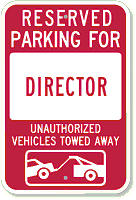
Status symbols as a way to reinforce hierarchy
Career path
In most organisations, management grades and pay scales are significantly higher than those of specialist roles. This reinforces the perception that managers contribute more value than others — even more than the engineer who invents the next killer application.
As a result, the only visible promotion path for specialists often leads into management.
This attracts:
- specialists without leadership vision
- technocrats without people-management skills
- micro-managers focused on details within their narrow domain
You’ll end up doing far less of the work that got you promoted in the first place.
Pay
Financial and non-financial incentives are strong drivers. The pay ceiling in management roles is significantly higher than in non-management roles.
For many employees, becoming a manager is the only way to:
- increase income
- support a growing family
- gain financial security
These artificially created managers often weaken management quality and produce technocrats rather than people leaders.
In the public sector, employees are rarely eager to become managers. They often have to be pushed into lower-management roles, which offer little reward and high exposure to criticism.
➡️ Why Government Workers Are Harder to Motivate — Harvard Business Review
Influence
Management positions grant influence — or at least the illusion of it. Many believe they can run things better than others.
This driver often results in:
- prescriptive management
- micromanagement
- widening gaps between Work As Imagined and Work As Done
The result is an industrial view of people:
Manager smart, worker stupid.
Leaders lead people. Managers manage tasks.
Leaders inspire people to manage tasks.
Managers manage tasks by directing people.
The difference is simple:
Leaders have people follow them.
Managers have people who work for them.
Desire for power
Some people seek management for the power to control others.
Often rooted in insecurity, these individuals believe power is finite and must be accumulated. Listening to employees is seen as surrendering power.
Common behaviours include:
- humiliation and bullying
- deception and blame-shifting
- suppressing dissent
- abuse of hierarchical authority
In extreme cases, this escalates into harassment or physical aggression.
Why anyone would want to control you
Psychopathy, narcissism, and a desire for control are frequently associated with power acquisition. These traits are shaped by both genetic and environmental factors.
From an evolutionary perspective, higher status historically meant:
- better access to resources
- greater reproductive opportunity
- improved survival odds
Another explanation is emotional insecurity:
People who cannot control themselves attempt to control others to stabilize their self-image.
➡️ Why Anyone Would Want to Control You
Power as influence enables responsibility for others.
Power as autonomy enables freedom from others.
Effective managers
Managers tend to fall into three motivational groups:
-
Affiliative managers
Want to be liked more than effective. -
Achievement-driven managers
Focus on goals and recognition, often prioritizing themselves. -
Institutional managers
Build power through influence rather than authority.
The third group is the most effective. Their teams:
- show higher responsibility
- understand organisational goals
- demonstrate stronger team spirit
Running a business successfully does not automatically translate into good management. Effective managers influence people — they don’t just outperform them individually.
Should I become a manager?
Ask yourself honestly:
- Is management my goal — or a perceived path to money and status?
- Am I willing to be accountable for outcomes I don’t fully control?
- Am I comfortable navigating conflict and emotional complexity?
- Am I ready to stop being a “doer”?
Once you become a manager, you will do far less of the work that got you there.
The right reasons to become a people manager
You should consider management if:
- You care deeply about people and their success
- You enjoy mentoring and developing others
- You listen more than you talk
- You collaborate instead of command
- You put team goals above personal ego
- You align individual goals with organisational goals
- You genuinely enjoy working with people
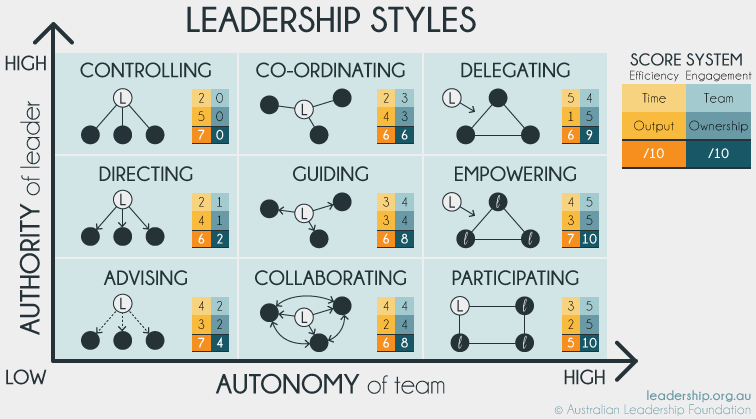
References
- https://www.forbes.com/sites/glennllopis/2013/12/16/6-reasons-managers-take-their-employees-for-granted/
- https://hbr.org/2003/01/power-is-the-great-motivator
- https://www.theatlantic.com/health/archive/2016/03/people-want-power-because-they-want-autonomy/474669/
- https://www.quora.com/What-is-the-root-cause-for-the-desire-to-have-power-over-other-people
- https://www.techrepublic.com/blog/10-things/10-requirements-of-the-perfect-manager/